
Maṅgala Sutta: 38 Conditions for a Stable Life
The Maṅgala Sutta as a Framework for Living
The Maṅgala Sutta endures because it offers a clear blueprint for living.
Preserved in the Sutta Nipāta of the Pāli Canon, it presents thirty-eight conditions that strengthen a human life. Not promises. Not rituals. Not vague inspiration. Conditions. Each one names a choice or habit that leads toward stability and away from unnecessary conflict.
This site approaches the Maṅgala Sutta as practical guidance. It is not treated as a cultural artifact or a collection of quotations. It is examined as a sequence of actions that shape character over time.
The central question is simple: what actually makes a life steady? The sutta answers directly. Some behaviors build reliability. Others create disorder. The text names what helps and what harms, without exaggeration and without drama.
The Enduring Relevance of the Maṅgala Sutta
The Maṅgala Sutta continues to speak across centuries because it organizes ethical life into a clear sequence. It does not offer scattered advice. It names conditions that strengthen stability over time.
Preserved in the Sutta Nipāta of the Pāli Canon, the discourse presents thirty-eight conditions that support a steady life. Not promises. Not rituals. Not vague inspiration. Conditions. Each one describes a way of living that reduces friction and increases clarity.
In Theravāda societies, the word maṅgala came to signify what genuinely supports life. Not luck. Not superstition. What actually leads to well-being.
The teaching continues to resonate beyond religious settings because it describes cause and effect in ordinary human experience. When speech is careless, relationships strain. When responsibility is avoided, instability grows. When conduct is disciplined, steadiness increases.
You do not have to adopt a religious identity to see this. You only have to pay attention to what strengthens your life and what weakens it.
Stability in an Age of Agitation
Modern culture rewards speed, reaction, and constant comparison. Attention is fragmented. Outrage spreads quickly. The pressure to respond never fully stops.
The Maṅgala Sutta moves in the opposite direction. It does not encourage intensity. It encourages steadiness. It does not reward stimulation. It strengthens consistency.
Clarity, in this teaching, is not a personality trait. It is the result of repeated choices. When conduct is aligned, the mind becomes less agitated. When perception is trained, reactivity weakens.
Habits matter. When you practice restraint instead of impulse, pressure carries less force. When you meet responsibilities directly, regret accumulates less often. When speech is careful, relationships erode less quickly.
The stability described in the sutta is not dramatic. It is built quietly, through ordinary decisions made consistently over time.
From Text to Application
Ancient teachings remain alive only when they can be applied.
The Maṅgala Sutta is brief, but it reaches into daily life. It affects how decisions are made. How conflict is handled. How ambition is directed. How family responsibilities are met. How success and failure are interpreted.
This site is not interested in admiration. It is interested in application.
What changes in professional conduct when restraint is taken seriously?
What changes in response when criticism arises?
What shifts in what one pursues and what one declines?
The question is not whether the teaching is admirable. The question is whether it alters behavior.
Structured Study
For readers who want deeper study, Living the Mangala Sutta examines each of the thirty-eight blessings as a developmental condition. It follows the original sequence of the discourse and explores how that order shapes ethical growth over time.
The book does not rearrange the teaching or reinterpret it for trend. It keeps the structure intact and asks a practical question: how does this sequence operate in contemporary life?
The focus is not novelty. It is clarity and continuity.
Living the Mangala Sutta
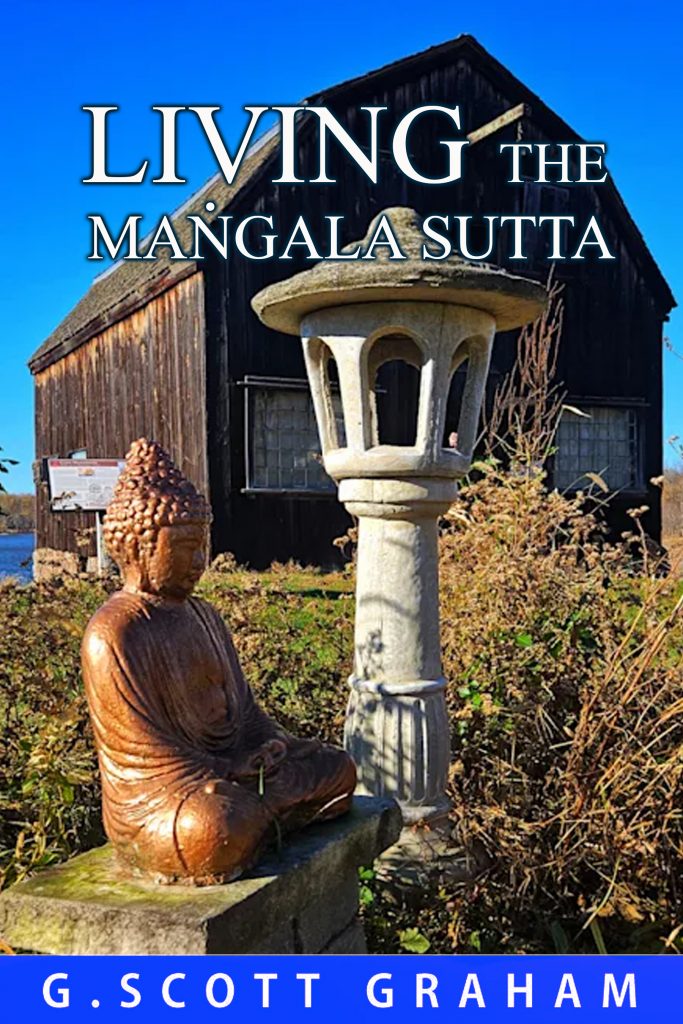
Living the Maṅgala Sutta is a modern, practice-oriented exploration of the thirty-eight blessings as developmental conditions. It approaches the sutta as a structured framework for ethical maturity, mental clarity, and relational steadiness. The emphasis is on preserving the sequence and seriousness of the original teaching while clarifying how its conditions operate in contemporary life.
About the Author
G. Scott Graham is a long-term practitioner of Vipassanā meditation with decades of disciplined training. His work focuses on the practical application of early Buddhist frameworks in ordinary life. Rather than treating teachings as abstract philosophy, he approaches texts such as the Maṅgala Sutta as operational structures for shaping conduct, stabilizing the mind, and reducing avoidable suffering.

I’m not a Buddhist, and you don’t need to be to get immense value from Living the Maṅgala Sutta. The life lessons in this book are universal — grounded, timeless, and incredibly relevant to modern life. G. Scott Graham doesn’t just explain the teachings; he helps you apply them in a real, practical way.
This book is more than a read — it’s a tool for transformation. I highly recommend keeping a journal nearby as you go through it. The reflection questions and exercises will challenge you to think differently, act more intentionally, and align your life with values that actually matter. It’s the kind of book that can change the trajectory of your life — if you let it.
Whether you’re on a spiritual path or simply looking for clarity, peace, or purpose, Living the Maṅgala Sutta offers guidance that’s both ancient and urgently relevant. Don’t just read it — do it.

Don’t Just Read This Book — Live It
Heather DeFilippis

The book is a deep and yet practical guide to crafting a life of purpose and peace. The author draws on the 38 blessings of the Buddhist Mangala Sutta, using personal stories and exercises you can really practice. This ancient wisdom is presented in an easy-to-digest format. Each chapter basically gives a blueprint of ideas for you to apply to your own immediate environment, your habits, and how to imbue your mindset with right-thinking, inspiring integrity, and equanimity. The SMART framework promotes sustainable change, and the candid narrative does inspire resilience. This book isn’t just trying to help you understand Buddhist principles, but how to embody a meaningful life. For anyone seeking clarity and spiritual transformation in their life..
A Transformative Guide to Living with Wisdom
Derek Bruce